

The Fruit Forest

Although there are several local farmers markets in our area, we of course prefer to eat fruit and vegetables grown on our own land. Establishing a "fruit forest" was the first priority of the pioneers of our community, back in 2018. At present, fruit trees are growing all over the place. The variety is continually increasing and many are producing, yet others are still not old enough. We regularly harvest fruit that can't be found in markets, types most people don't know exist. Although there were some older fruit trees on the land when we purchased the initial parcel, the vast majority of our hundreds of fruit trees were planted by us.
Vegetables and Experiments
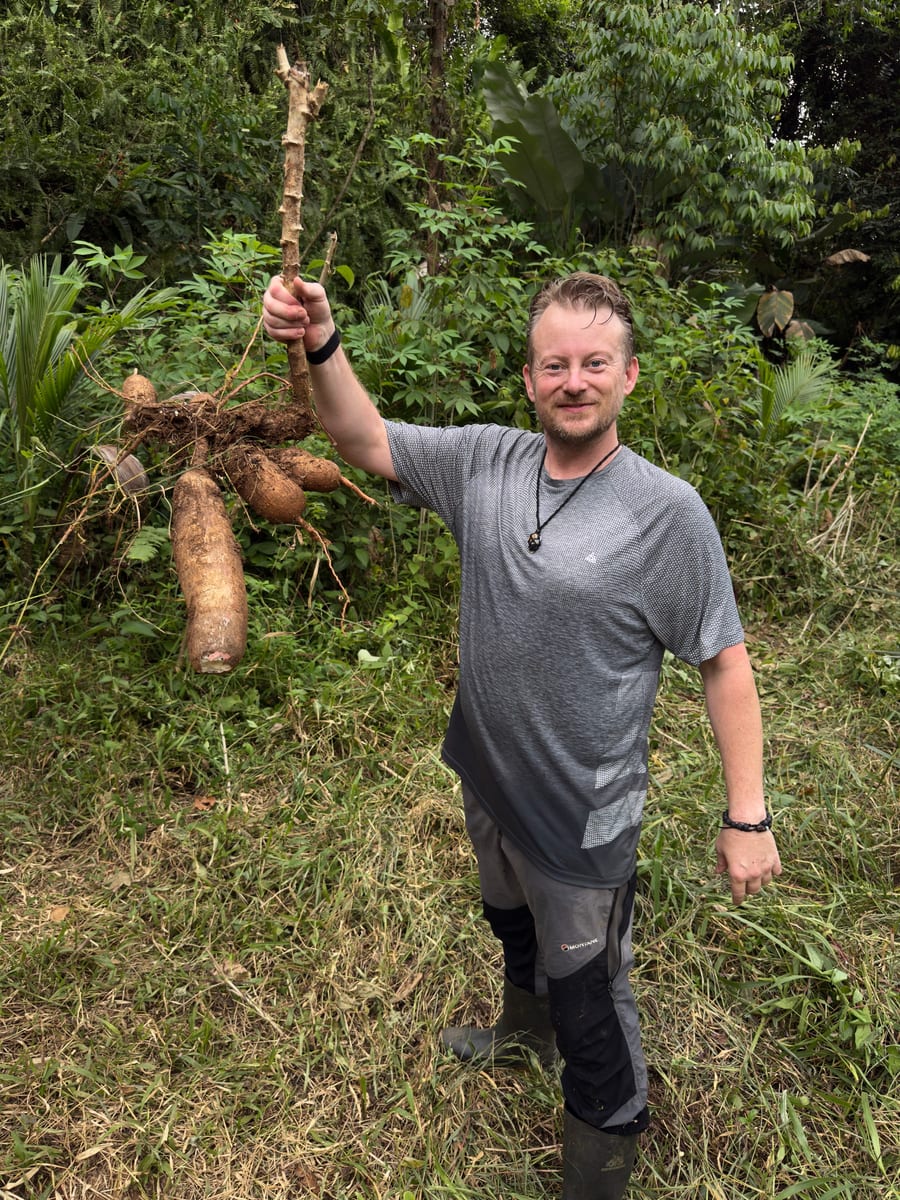
A variety of root vegetables grow well here; some of them, such as yuca, are ridiculously easy. The same can be said for the leafy greens we regularly add to our salads. Although the emphasis from the beginning was on fruit trees, we are gradually focusing more energy on vegetable types of plants. Generally speaking, the traditional vegetables of Western culture don't grow well in the tropics due to insects, an over abundance of rain, and at times, too much sun. In order to expand our variety of vegies, we are experimenting with a porous greenhouse and other strategies. We also network with other growers. Foreigners and locals from this area regularly share or sell seeds, cuttings, and small potted fruits and vegetables.
What We Grow
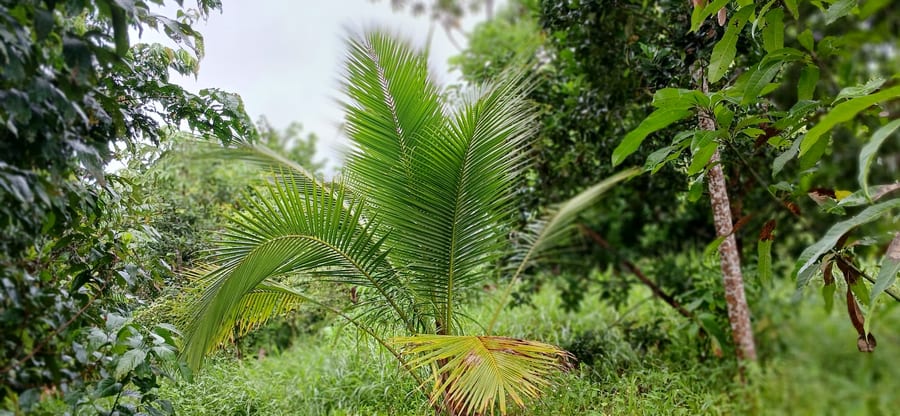
Naturally, some trees take longer than others to produce fruit. Our ten different varieties of bananas take 1-2 years to produce and we generally have an abundance, sometimes more than we can eat. Our lemon trees, which are relatively sweet since they were crossbred with oranges, are basically wild and produce prolifically. Bariba trees only need about two years to bear fruit, guayabana and jack fruit take about three. Our small variety of coconut palms, called pipas, take six years to produce and they started doing so last year, which is great considering the amount some of us consume.
-
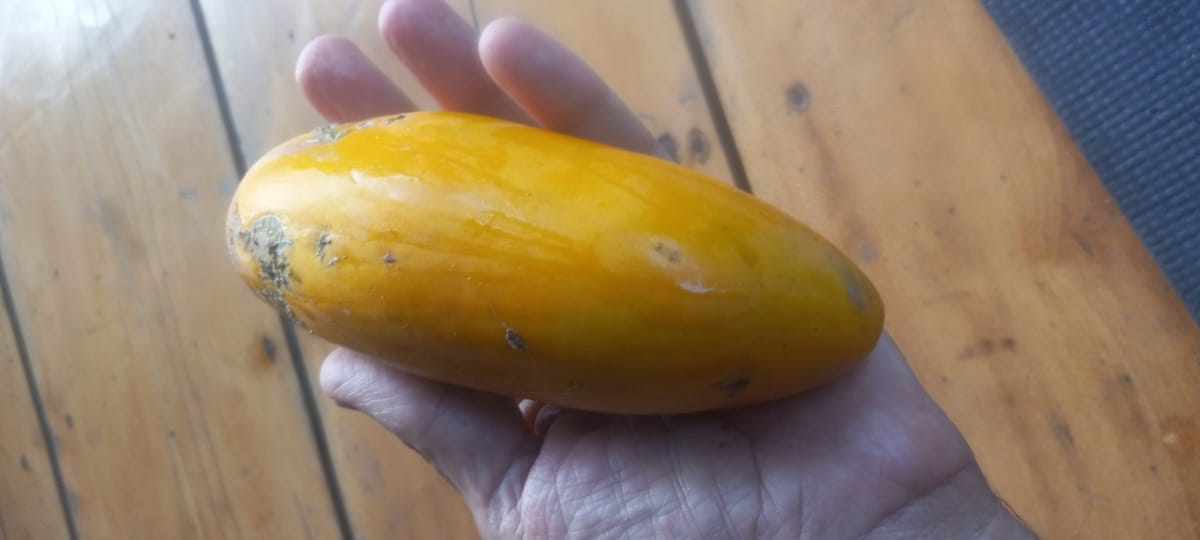
First papaya -
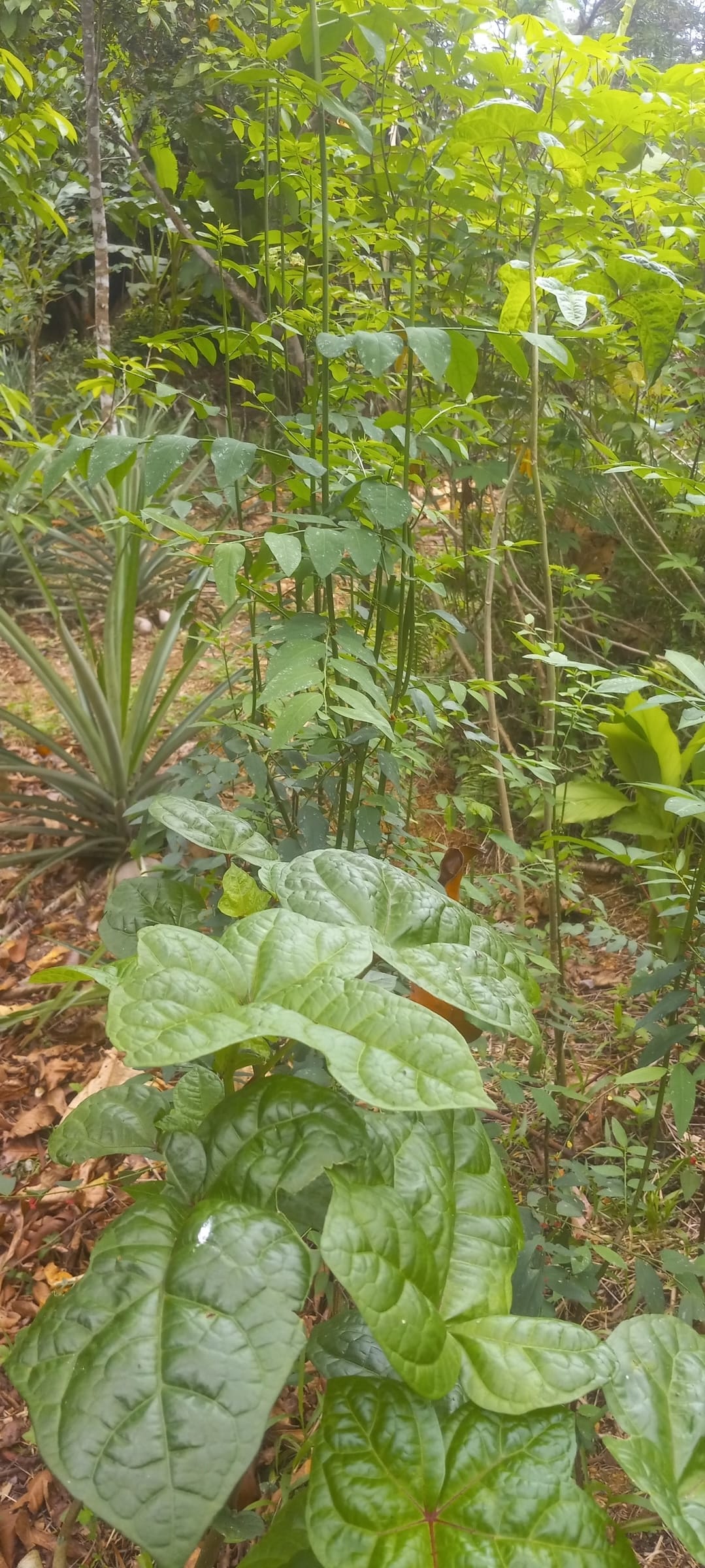
Pacific spinach leaves -
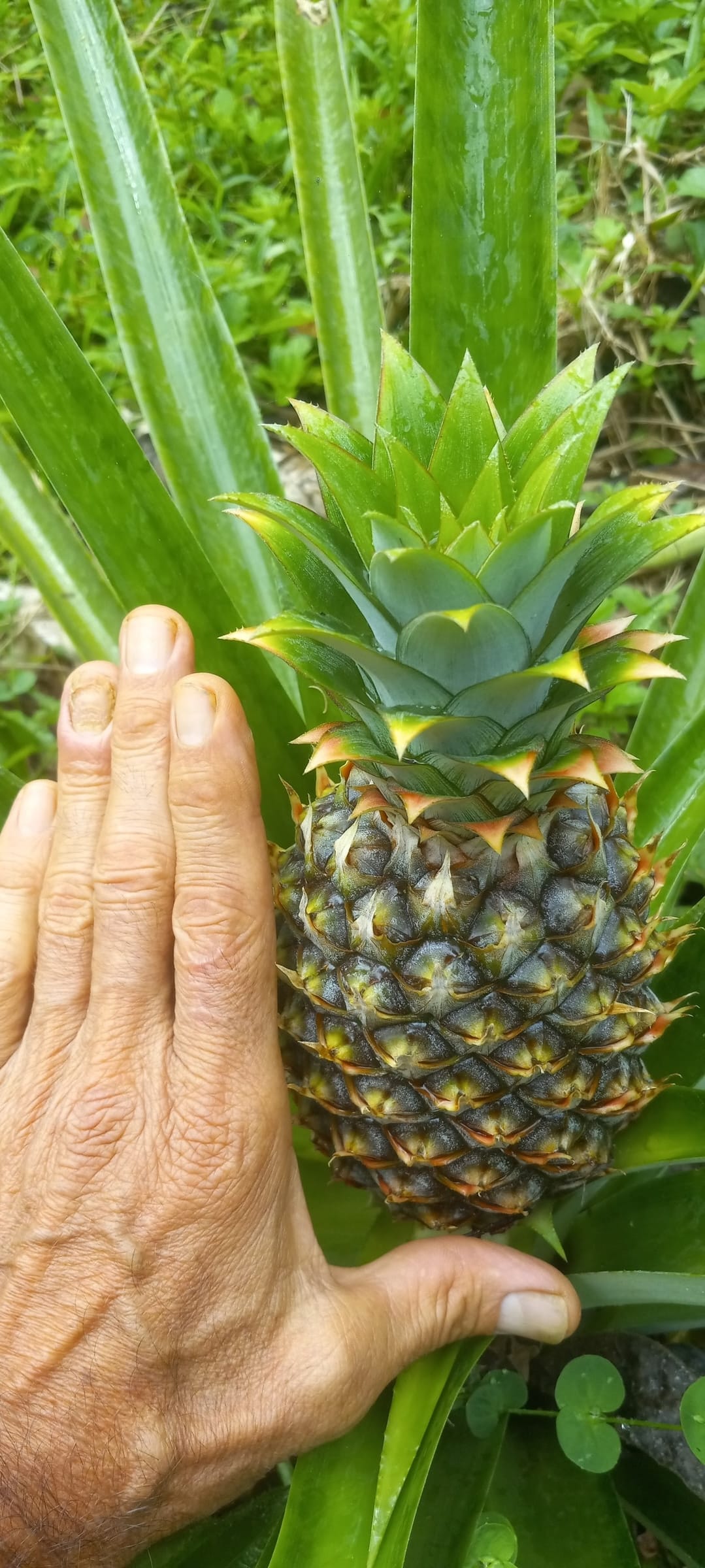
Young pineapple -
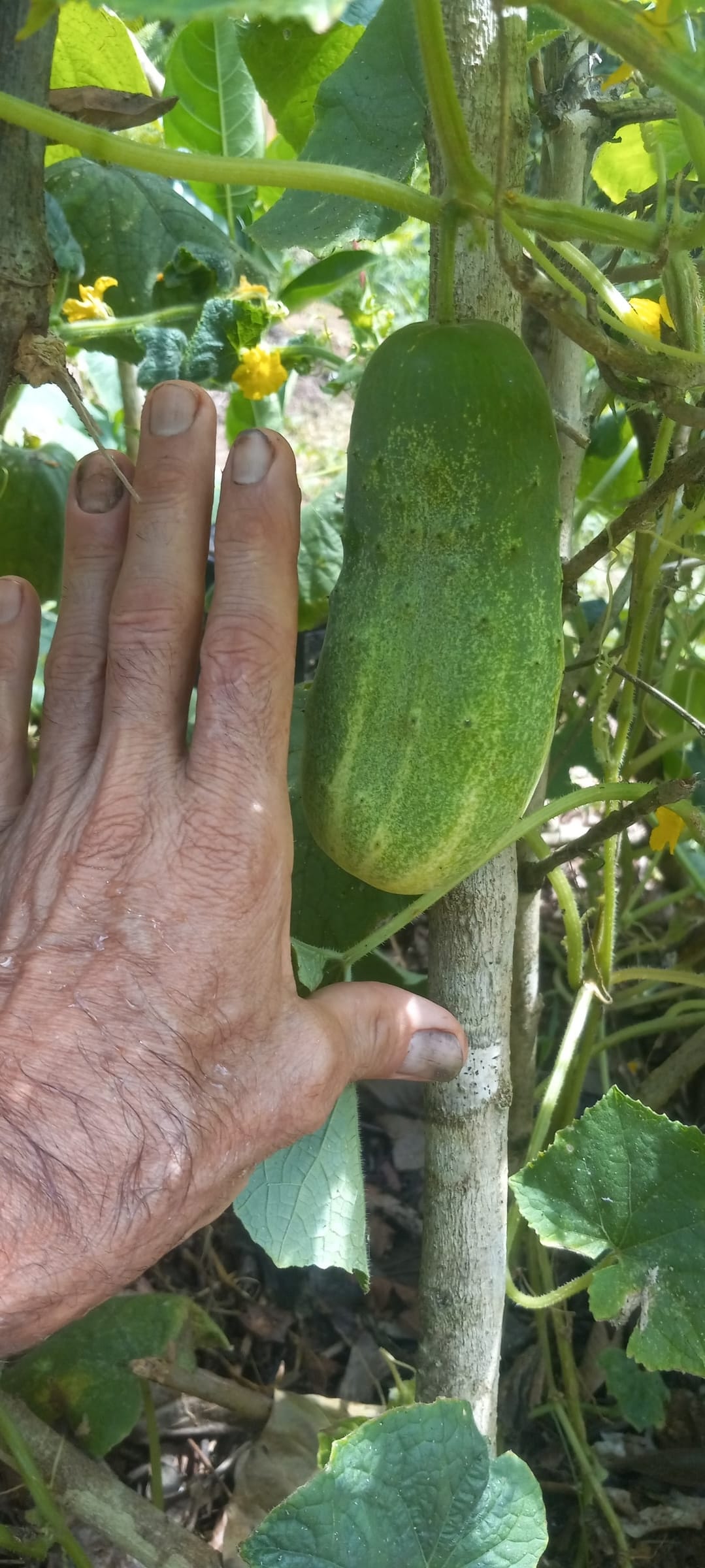
Growing our own cucumbers -
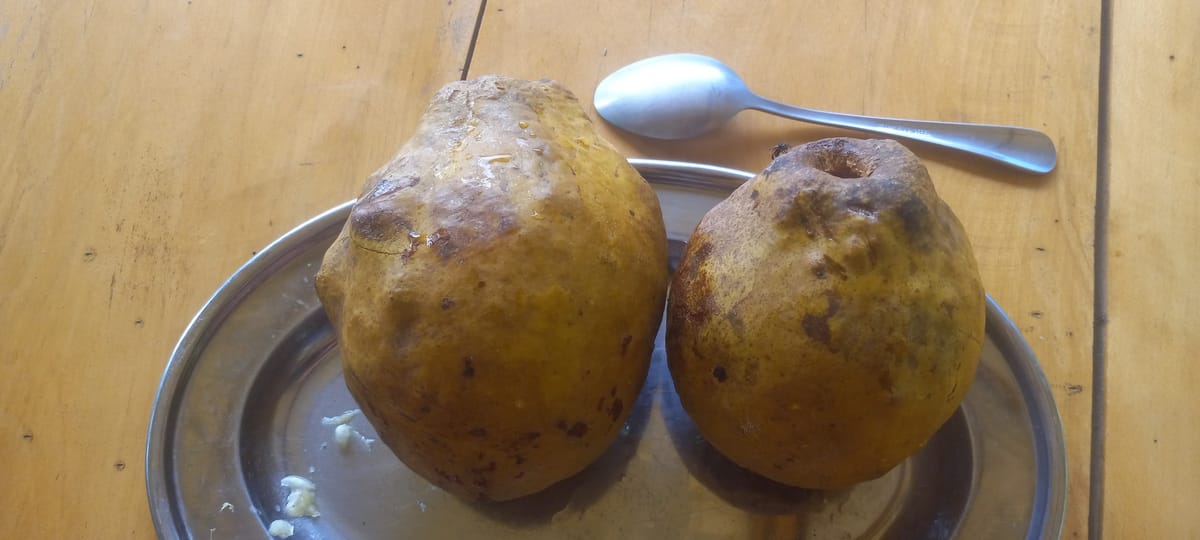
Sun Zapote fruit taste like pumpkin pie -
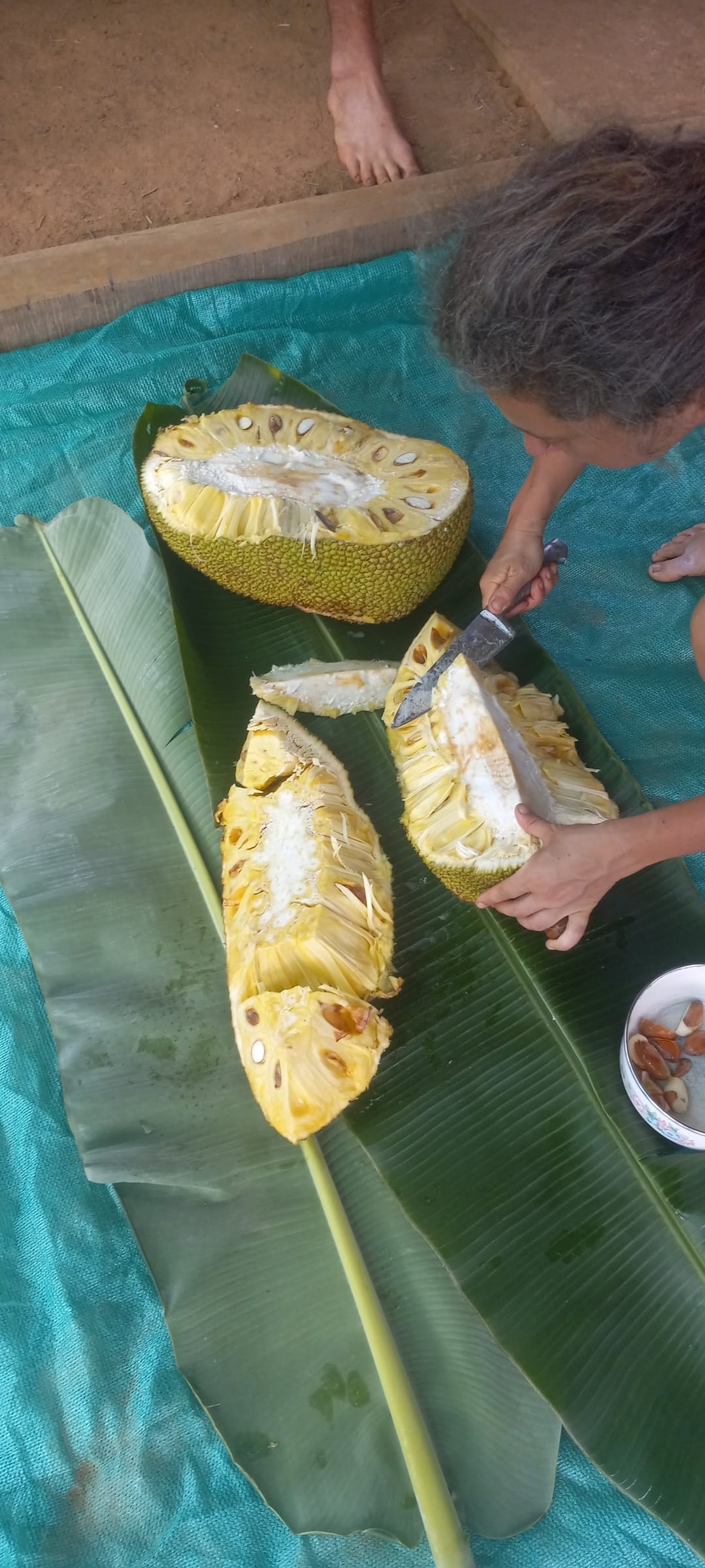
Jack fruit can grow to 15 kg or more -
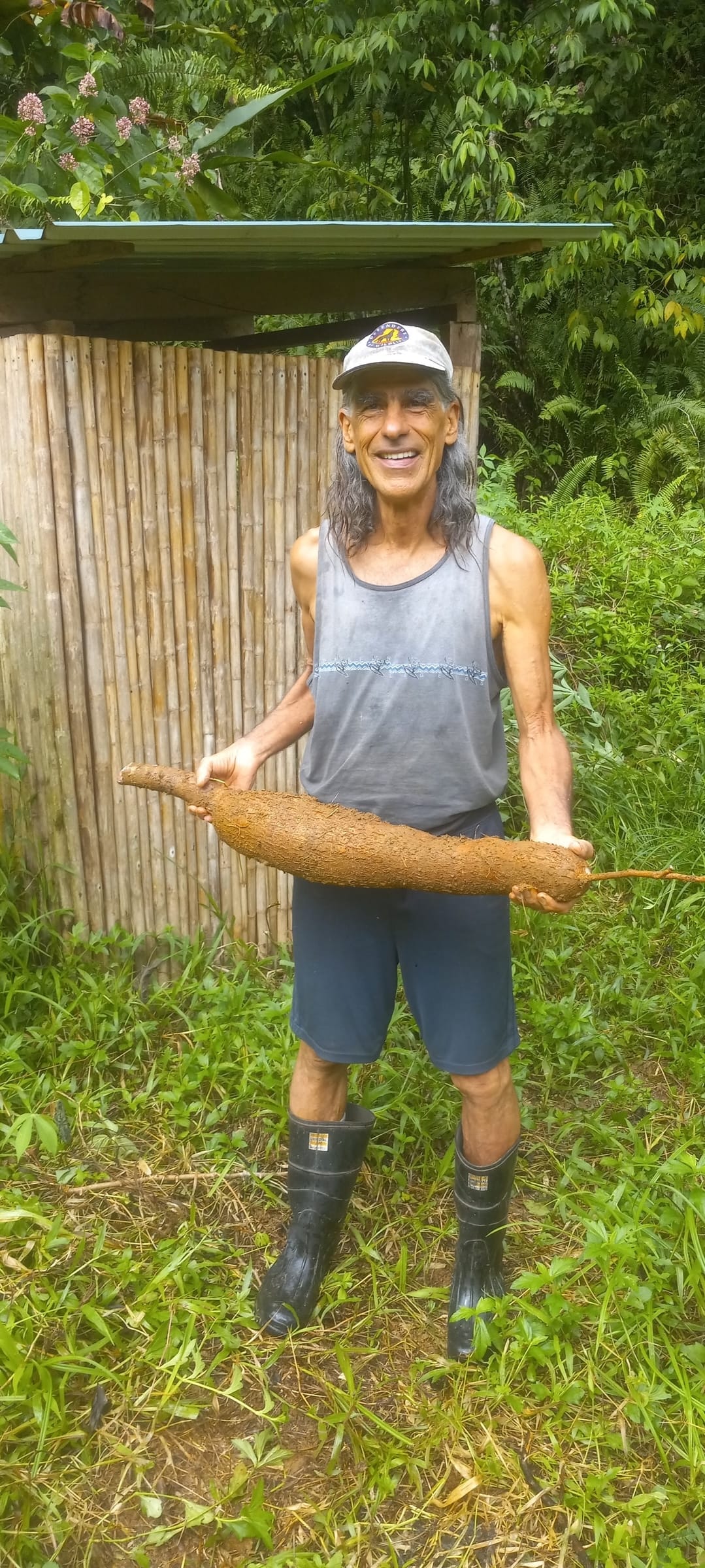
Mark's largest yuca ever -
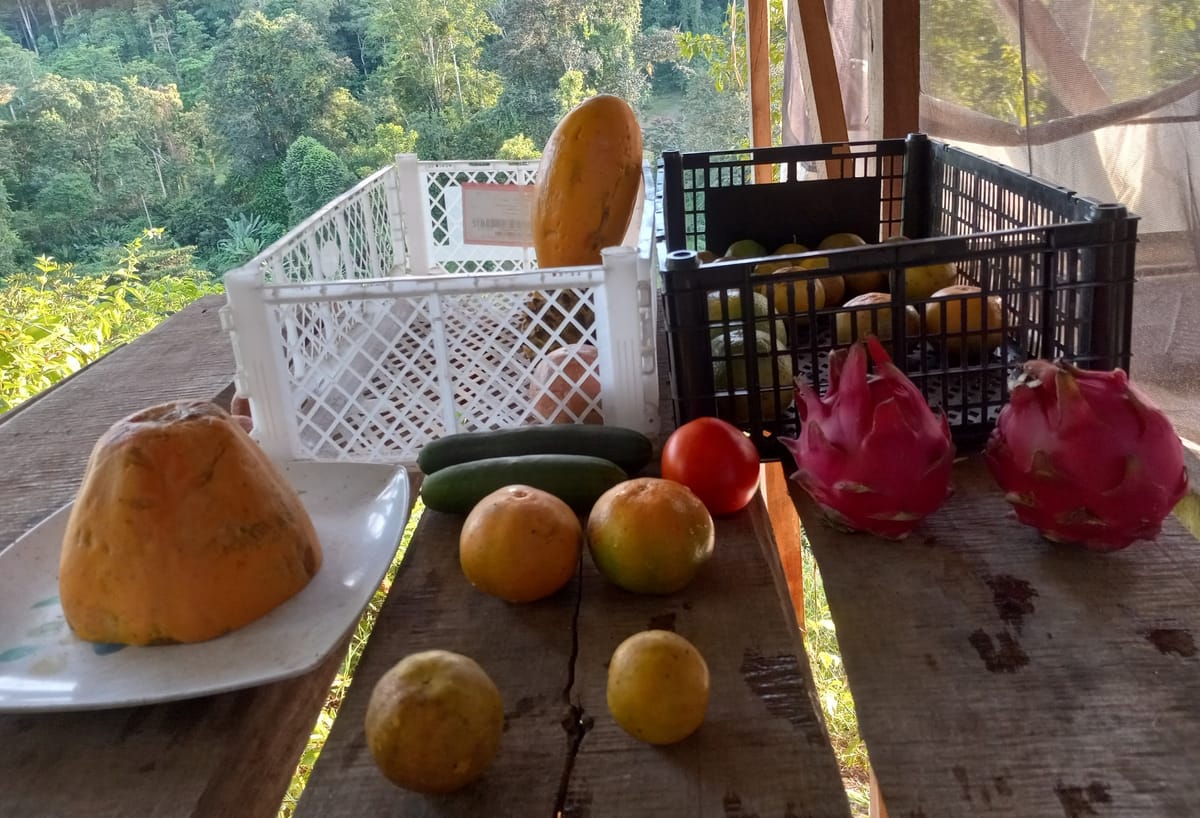
Fruit from the local farmer's market -
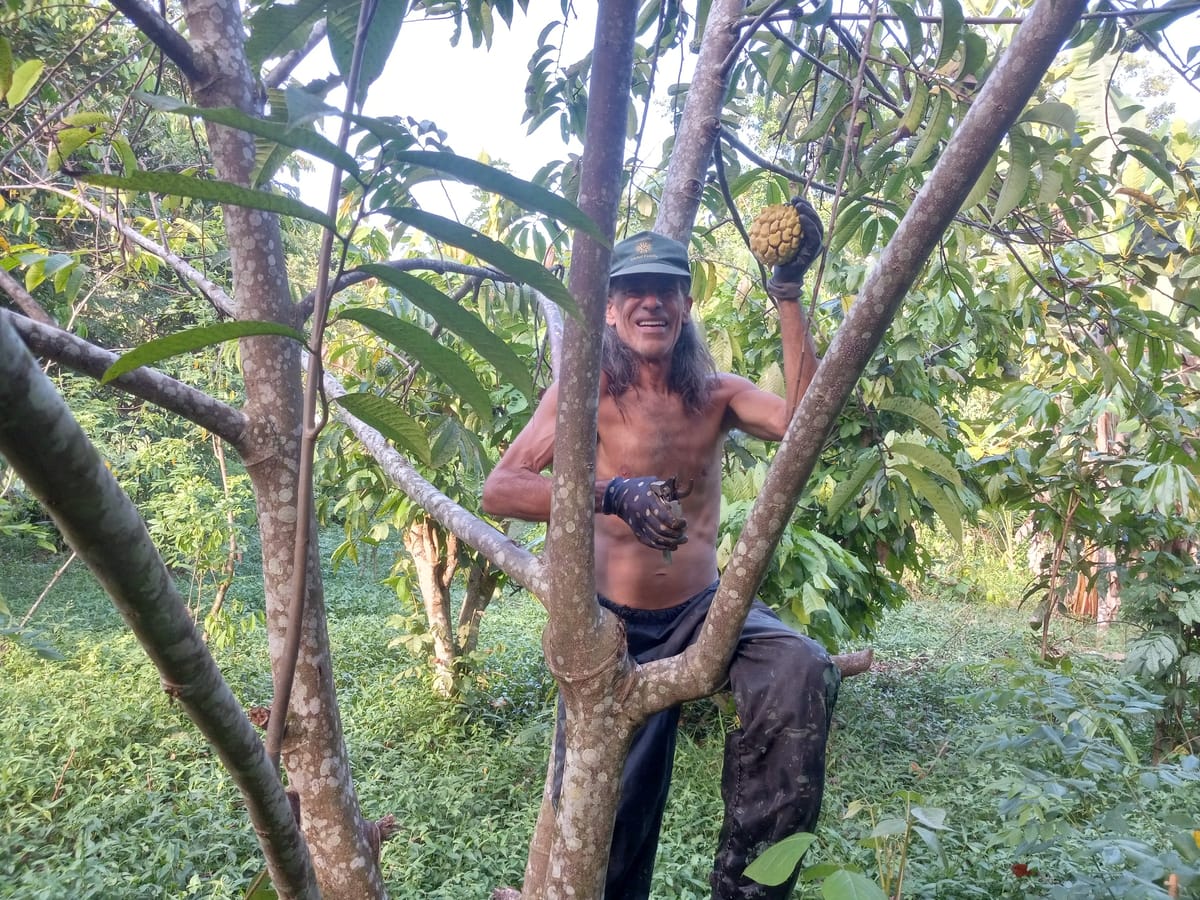
Harvesting baribas -
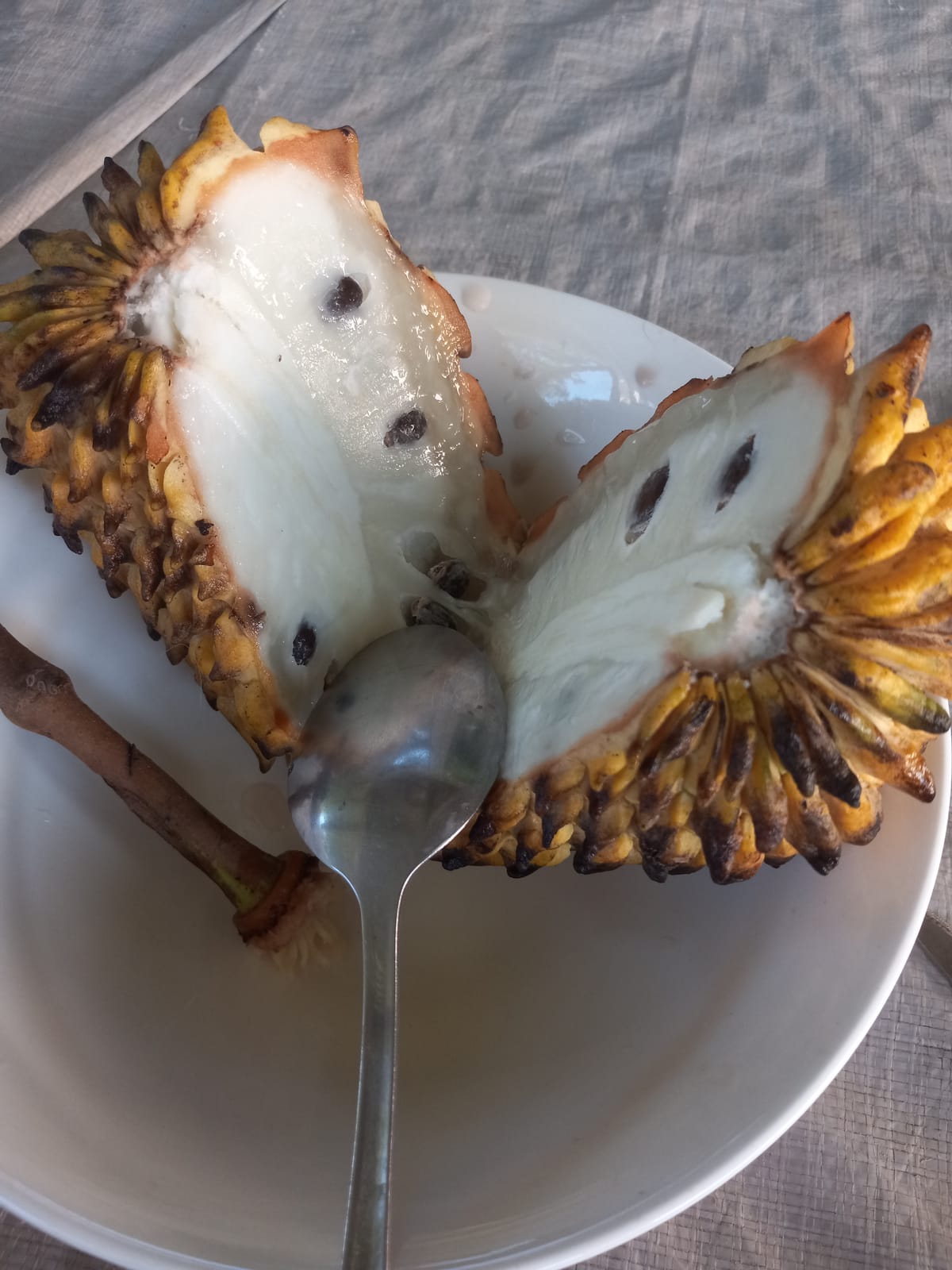
Inside a bariba


